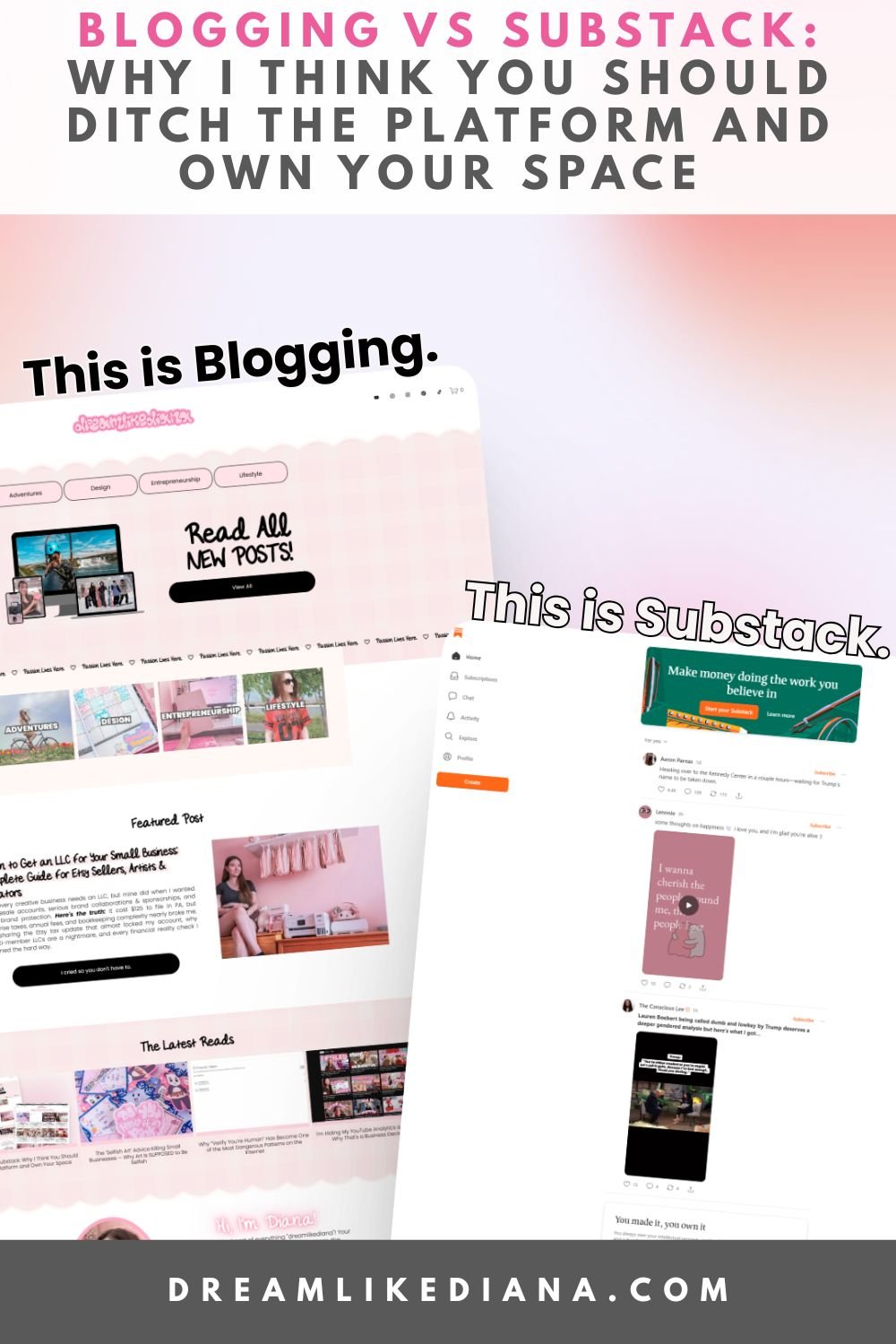
Blogging vs. Substack: Why I Think You Should Ditch the Platform and Own Your Space
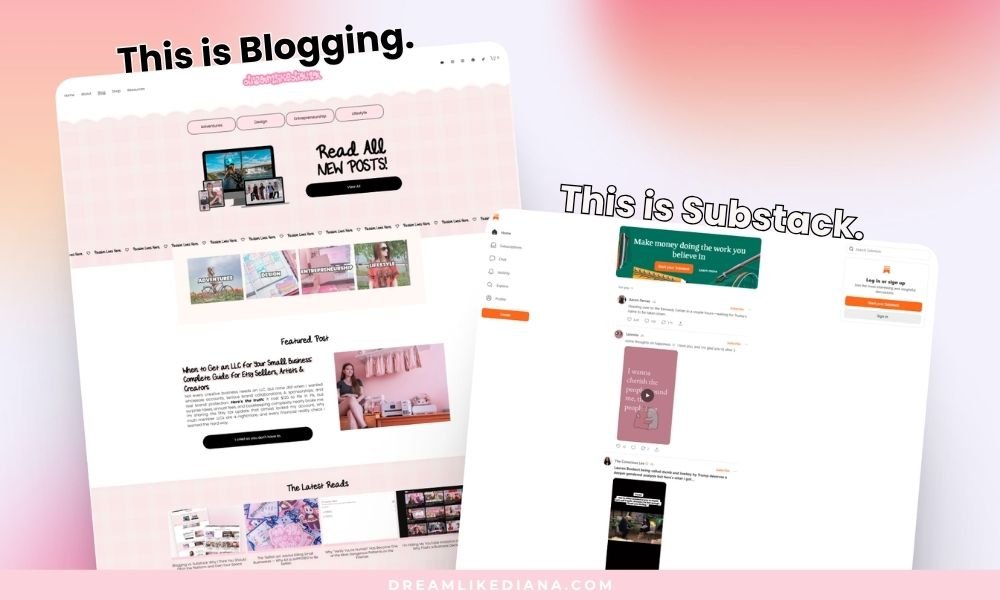
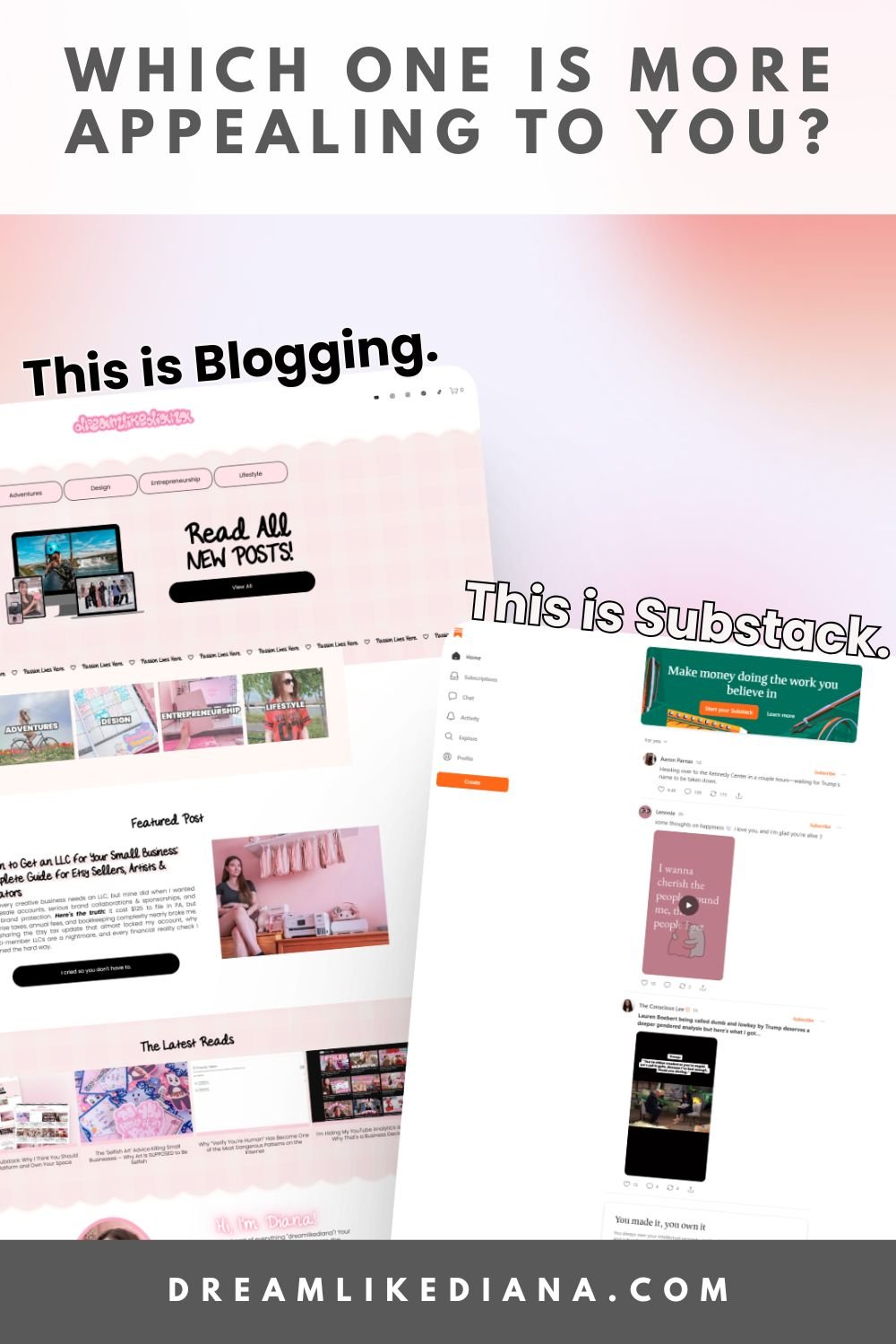
Which one is more appealing to you?
Let me be real with you. This post is not a hit piece. I'm not here to drag Substack into the dirt just for the sake of it. But I do have a gripe, and it's one that I think a lot of creators, or those who want to be one, need to hear because what's happening out there is quietly hurting people who just want to write and share their work with the world.
A lot of big creators I genuinely like and admire started a Substack. Some of them were people I followed for years. And without fail, not long after launching their Substack newsletter, they stopped writing entirely. Just gone. Radio silence. And watching it happen over and over again made me start asking a real question:
Why are people choosing Substack when what they actually want is a blog?
Because here's the thing. A blog can do basically everything Substack can do. And then some. So let's talk about it.
The Substack Promise vs. The Substack Reality
Substack markets itself as a place for writers. A platform that pays you to write, that gives your words a home, that connects you to readers who actually care. And on paper? That sounds great. The idea is genuinely appealing, especially for people who are tired of social media's noise and just want to get back to writing.
But the reality a lot of creators are running into is a different story.
The platform has evolved into something that feels less like a writing home and more like another social media app with a publishing feature slapped onto it. And I'm not the only one saying this. Reddit is full of creators venting about it.
One user on r/Substack put it plainly: no matter how good your writing is, you will not get seen unless you make the external effort of promoting your work. Another said they joined with high hopes and the deeper they got, the more disheartening it felt. Someone else described the entire experience as growth-chasing dressed up as community.
That's not a writing platform. That's just another platform.
What Actually Bugs People About Substack
I spent some time reading through Reddit threads from actual creators, actual humans, and actual subscribers talking about their frustrations with Substack. What struck me wasn't that people were complaining. People complain about everything on the internet. What struck me was how familiar the complaints sounded. Because every single issue people were describing wasn't really a Substack problem. It was a platform problem. And that's an important distinction.
The more I read, the more I realized people weren't looking for another social media platform. They weren't looking for another feed to manage, another algorithm to understand, another audience-building game to play. They wanted a place to publish their writing. A place they controlled. A place where their work could live.
In other words, they wanted a blog.
That's the irony of the whole thing. People keep signing up for Substack because they think they're escaping social media, only to discover they've walked into social media wearing a different outfit.
The hard truth is that blogging asks for patience. It asks you to think in years instead of weeks. It asks you to create assets instead of posts. And after a decade of social media conditioning us to expect immediate feedback, immediate growth, and immediate validation, patience feels almost unnatural. But patience is exactly why blogging works.
A blog post written today can still be discovered three years from now. A social media post written today is usually forgotten before the weekend.
Most of the complaints people have about Substack ultimately come back to that same tension: creators wanting the long-term benefits of blogging while still chasing the short-term rewards of social media. And those two things rarely coexist peacefully.
So let's make this ridiculously easy.
After reading through thread after thread after thread, I noticed the same handful of complaints showing up again and again.
Different people. Same problems.
Here's the condensed version:
→ It rewards people who already have audiences
This is probably the most misleading thing about Substack, and it's something I wish more people talked about openly. When people hear stories about creators making six figures on Substack, they often assume those creators built those audiences on Substack. Many didn't. They brought audiences with them.
A journalist with 500,000 Twitter followers launches a newsletter and immediately gets thousands of subscribers. A creator with a massive YouTube channel opens a Substack and fills it overnight. An entrepreneur with a huge email list migrates everyone over. That's not growth generated by the platform. That's audience transfer. There's nothing wrong with that. But new creators deserve to understand the difference. The platform gets credit for growth that was often built somewhere else entirely. And that's where disappointment starts. A new writer signs up, publishes thoughtful work, waits for the magic to happen, and discovers the same thing bloggers have known for decades: people don't automatically find you just because you hit publish.
You still have to build trust.
You still have to build an audience.
You still have to create work worth returning to.
The difference is that with a blog, you're building that audience on property you actually own.
Reference: Post
→ The Notes feature turned it into Twitter/X
Multiple users across different threads pointed this out. One person said it best: the posts feel like Twitter/X, and they just want to read, not scroll through more micro-content. Another called Notes a Pinterest-like surface full of aesthetic content that has nothing to do with why they came to the platform. And someone else described it as what you'd get if Twitter and LinkedIn had a baby.
This is a real problem. The whole appeal of Substack was supposed to be long-form, thoughtful writing. When the platform starts optimizing for short-form engagement content, it betrays that core promise.
→ The algorithm and growth noise
One person said they couldn't shake the growth guru content in their feed. Another noted that the platform keeps changing in ways that feel arbitrary and make it harder to use, especially for older audiences. And the endless parade of people being 'surprised' to have gained thousands of subscribers overnight feels, in their words, obviously just promotion in disguise.
→ Paywalls are exhausting
A recurring theme is the frustration around content being locked. One person described watching blogs they used to read for free gradually disappear behind paywalls and Substack subscriptions. The internet used to feel more open. Now it feels like every good writer has a paid tier and another paid tier on top of that.
I get wanting to be paid for your work. I really do. But there's a real difference between monetizing thoughtfully and making readers feel nickel-and-dimed every time they try to learn something or connect with someone they like.
→ The forced recommendations are spammy
This one is personal for me. The recommendation system on Substack where subscribing to one newsletter can accidentally subscribe you to others is not acceptable. My email has been leaked into the void enough times through random brand sign-ups and data breaches. I don't need a writing platform adding to that chaos. One accidental click and suddenly someone you've never heard of is in your inbox. It's spammy. It doesn't feel good and it's not good. I see other newsletter campaign services trying to adapt the SAME technique and I dislike it entirely! No, it’s got to go!
Reference: Post
→ Basic blogging tools are missing
One creator pointed out that Substack still doesn't let you wrap text around images. A feature that has existed on every blogging platform, including old-school Blogger. That's a pretty significant gap for anyone trying to create visually compelling content.
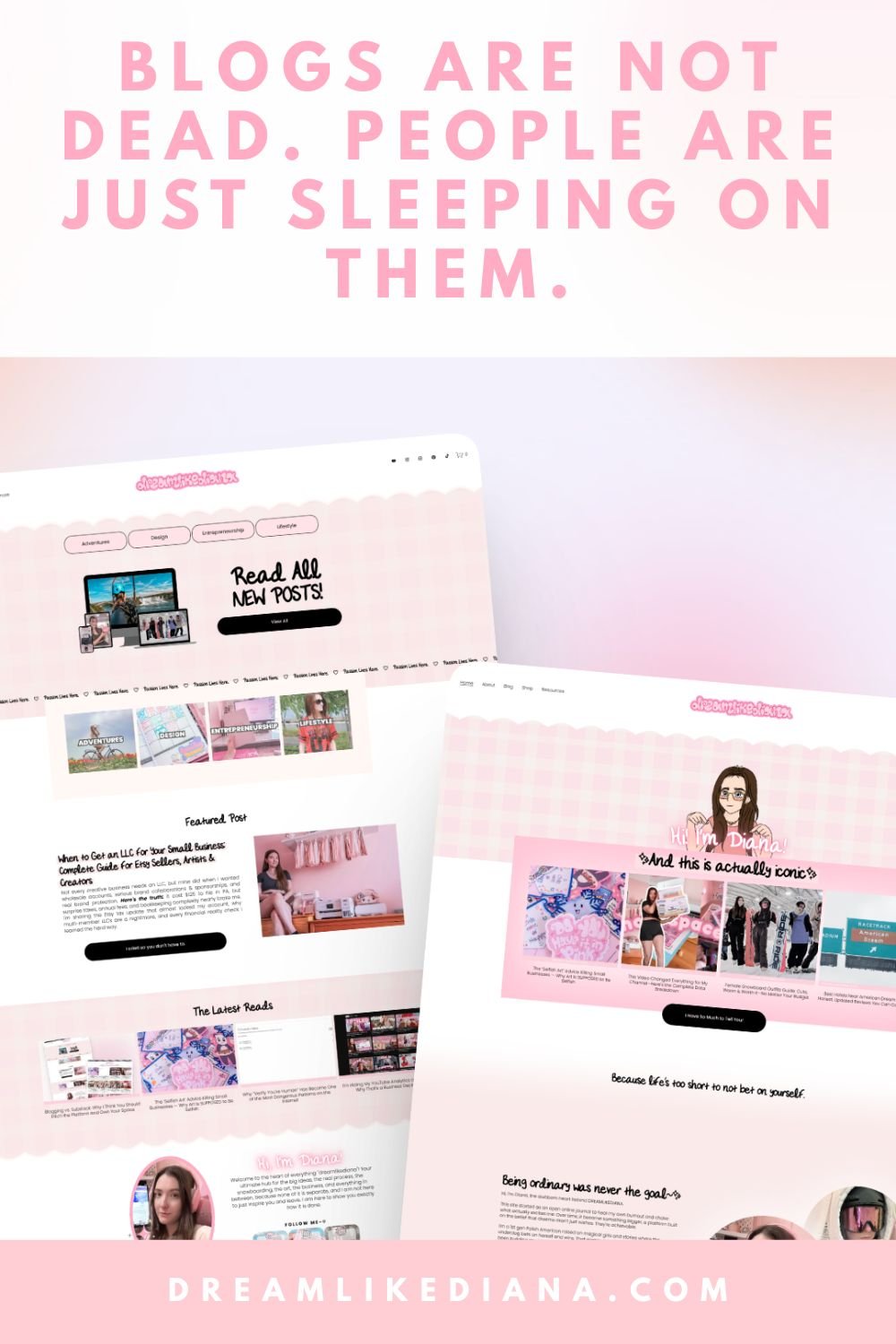
Blogs Are Not Dead. People Are Just Sleeping on Them.
The Verge posted an article on May 10, 2026 called, “Writers are fleeing the Substack Tax,” most people will read that headline and move on. I got stuck on something else entirely. Right near the beginning of the article is this line:
"Just last month, The Ankler, one of Substack's most popular publications, left for a platform that gives it more control over its site."
Read that again. One of Substack's most successful publications left Substack because it wanted more control over its site. Not more features. Not more recommendations. Not a better Notes feed.
Control.
Ownership.
The thing bloggers have been talking about for years.
MIC. DROP.
Because that's the conversation nobody wants to have. If blogging is dead, why do successful publications keep leaving platforms and building on domains they control? If websites don't matter anymore, why are major creators investing in websites? If nobody reads anymore, why are millions of people still finding articles through search engines every single day?
The answer is simple.
Blogs aren't dead.
People just stopped talking about them.
For years we've been trapped inside platforms designed to convince us that content only matters if it gets immediate engagement. Immediate views. Immediate likes. Immediate subscribers.
Blogging plays a completely different game. A blog post isn't a performance. It's an asset. It's a digital property that sits there working long after you've finished creating it. While social media content is constantly expiring, blog content compounds. That's why I laugh whenever someone tells me blogging is dead. My blog receives traffic from articles I wrote years ago. Not weeks ago. Years ago.
I can take a month off and people still find my content. I can spend multiple week days away snowboarding, designing products, traveling, or living my life and my blog continues working in the background. That's not dead.
That's freedom.
And I think more creators are beginning to realize that the freedom they were looking for was never inside another platform. It was in owning their own corner of the internet.
I’ll say it again, blogging is not dead. If anything, people are starting to come back around to it because they are exhausted by videos. Exhausted by algorithms. Exhausted by the pressure to perform constantly just to stay visible. And blogging, done right, removes almost all of that pressure. Almost everything you can do on social media, you can do on a blog. Post your outfits. Share your thoughts. Review products. Tell stories. Document your life. The difference is that on a blog, each post is an asset that keeps working for you over time. A tweet disappears in hours. A blog post can bring in readers for years.
Ready to start your own blog or website?
My partner Bluehost makes it possible to get online for as little as $1.99 A MONTH. I spend over $321 a year before I make a CENT with my blog. So this is a steal you do not want to pass up if you want to have a professional blog and website! When you use my link, you unlock a special offer not available elsewhere:
A free domain for your first year
A free SSL certificate
1-click WordPress install
24/7 expert support with secure, reliable hosting
Plans start at $1.99 a month for 36 months (regularly $8.99 a month), with a 30-day money-back guarantee. The Starter Plan is $3.79 a month for 36 months through my link, renewing at $8.99 a month. Without my link, that same plan is $3.99 a month and renews at $9.99 a month after 36 months.
Bluehost is genuinely one of the most accessible ways for creatives, small business owners, students, and first-time site builders to claim their space online. You get to build on WordPress, which means you’re not locked into someone else’s platform or URL. You own it. I have a YouTube video coming soon breaking down exactly why I recommend starting this way, so stay tuned for that. But this is also similarly how I got my start with my blog and site back in 2019, but back then it cost me $30 for 1 year. Offer doesn’t expire, so you can comeback after you think about it! I’ll be here :) No judgement.
The SEO Argument (And Why It Actually Matters)
Here's the thing about blogs that Substack simply cannot replicate: SEO.
Search engine optimization is what allows strangers who have never heard of you to find your work when they go looking for something you've already written about. It's passive, compounding traffic. And it is genuinely one of the most powerful tools a creator can have.
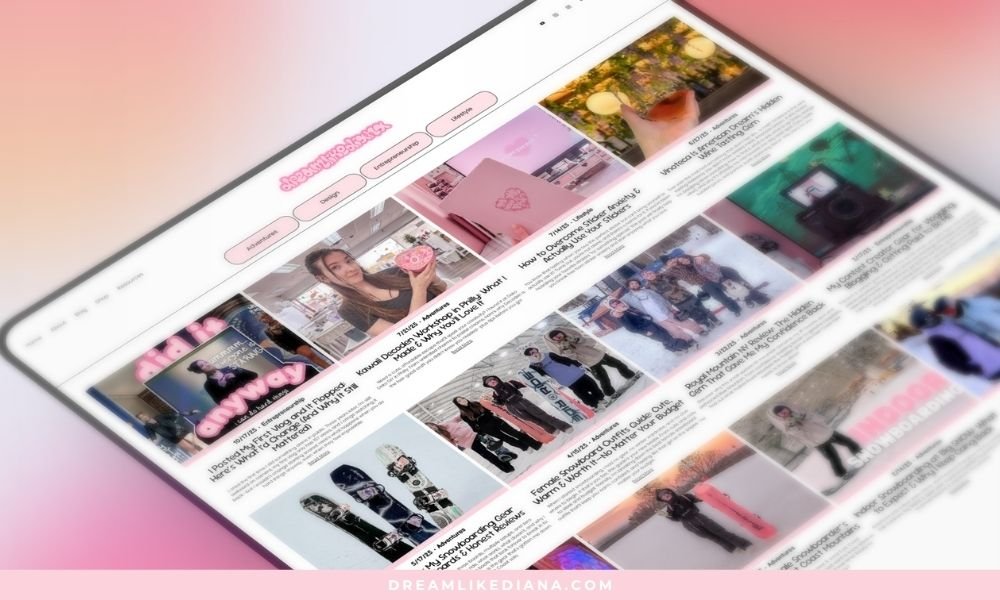
A year ago I wrote a post about snowboarding outfits for women at different budget levels. Some of the links were affiliate links. Some were just regular links. But because people were clicking and the traffic was coming from my site, brands noticed. Tactics reached out to me. I didn't reach out to them. I didn't even know they existed. My partner knew who they were. I didn't. That partnership came entirely from a blog post I wrote about something I cared about.
Things I started two years ago are landing opportunities in my inbox right now. That's the compounding power of owning your platform and letting SEO work for you. A blog post can introduce you to readers, customers, brands, media opportunities, affiliate income, and partnerships years after you publish it. That's not a one-time piece of content. That's an asset. And assets behave very differently than posts.
It's significantly harder to create that same kind of compounding discovery on a platform built primarily around subscribers rather than search.
A yourusername.substack.com URL will never carry the same authority as a professional domain you own. Period. Same goes for yourusername.wordpress.com, yourusername.blogger.com, Wix, Weebly, and anything else where you're essentially renting space under someone else's name. Your domain is part of your brand. It signals to readers, to search engines, and to potential partners that you're serious.
Growth Takes Time. Blogs Reward Patience.
Social media has done something really damaging to the way creators think about growth. It's made us believe that if we're not gaining thousands of followers fast, something is wrong with us. That we're failing. That what we're doing isn't good enough.
Blogs don't work like that. YouTube doesn’t work like that! And honestly? That's a feature, not a bug.
My first few months I had a few hundred readers. Then 17K impressions within the first year. Then 26K the year after that. And then on the third year my site skyrocketed to over 3 million impressions. Then 5 million. Then in a single month I hit over 1 million impressions on its own.
That didn't happen because I posted every day. It didn't happen because I had a rigid schedule or because I hustled my way to the top. It happened because I kept showing up when I felt like it, I wrote about things I actually cared about, and I let the SEO do its work quietly in the background.
Some years I had four posts.
FOUR!
And the blog still grew.
That's the beauty of blogging that nobody talks about. There's no pressure to perform. The SEO will work for you even when you're not working. You don't need to check your numbers every day. You don't need to watch a subscriber count tick up or down to know whether your work has value. I actually wrote a whole post about why hiding your analytics when you're just getting started is one of the best things you can do for your creative confidence. Check it out if you need that reminder.
On Monetization: Affiliate Links Over Paywalls
Let's talk about money because that's usually the reason people turn to Substack in the first place. They want to get paid for their writing. That's completely valid and I respect it. I do too!
But here's my honest take: paywalls are not the move for most creators, especially not early on.
The mistake I see creators make is trying to monetize attention before they've built trust. Someone might follow you because they stumbled across one good article. Trust takes much longer. Trust is what gets people to come back. Trust is what gets people to subscribe. Trust is what gets people to buy.
A lot of people hate paywalls. Not because they don't value your work, but because they're being asked to pay before they've had the chance to decide whether your work is worth it to them. That's a hard sell.
Affiliate marketing is a much lower-friction way to monetize a blog. You write about something you genuinely like or use, you include a link, and when someone buys through that link you earn a commission. No subscription required. No paywall. Just good content that naturally leads to a purchase decision. And because it lives on a blog post that SEO is actively driving traffic to, it keeps earning long after you've moved on to writing about something else.
Now, do I think paid subscriptions and memberships are worthless? No. I think they can be incredibly powerful. But the timing matters. Once you've built a real audience, once people genuinely trust you and look forward to what you create, then a paid tier with a clear, meaningful incentive makes sense. Not a freebie. Something actually worth it. Something your most loyal readers would be excited to pay for.
Patreon does this well for artists and creators who've built communities over years. Substack is trying to do something similar but the execution isn't landing for most creators who aren't coming in with a built-in audience already.
Your Website Should Look Like You
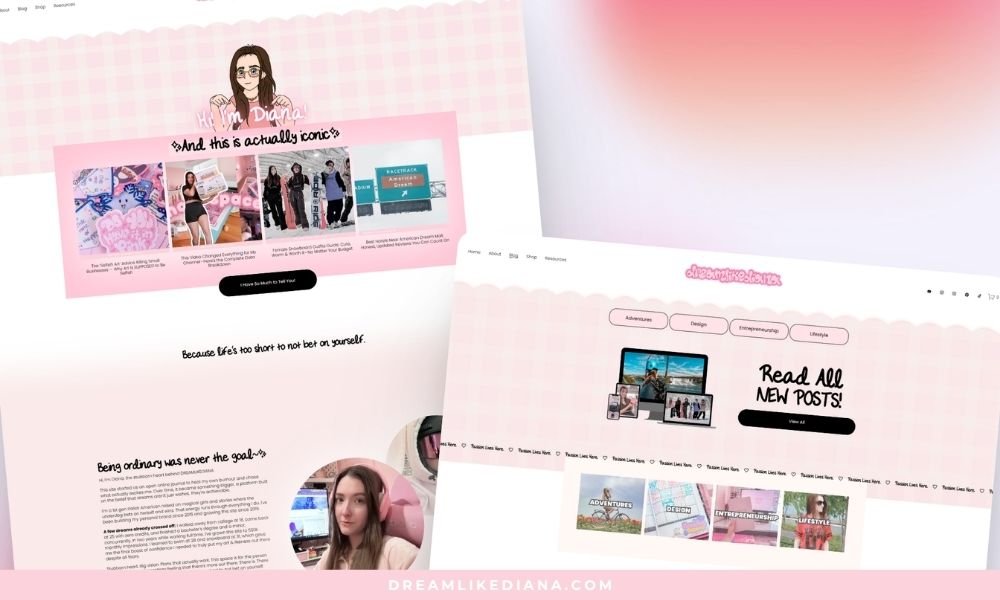
One of the most overlooked benefits of having your own website is that you get to control how people experience your work. And yes, that matters. People love to talk about SEO, email lists, and ownership. Those things are important. But design matters too.
Your website is often the first impression someone has of your business, your brand, or your work. Whether we like it or not, people make judgments quickly. A professional-looking website signals that you're serious.
I built this website myself, so obviously I'm a little biased. But the reality is that you don't need to be a web designer to create something beautiful anymore. There are countless themes, templates, and website builders available today.
What surprised me about Substack was how little flexibility there seemed to be. I took one look at the platform and thought, "Wait... this is what everyone's excited about?" The homepage felt more like a social feed than a website. More Facebook than blog.
And that's the problem.
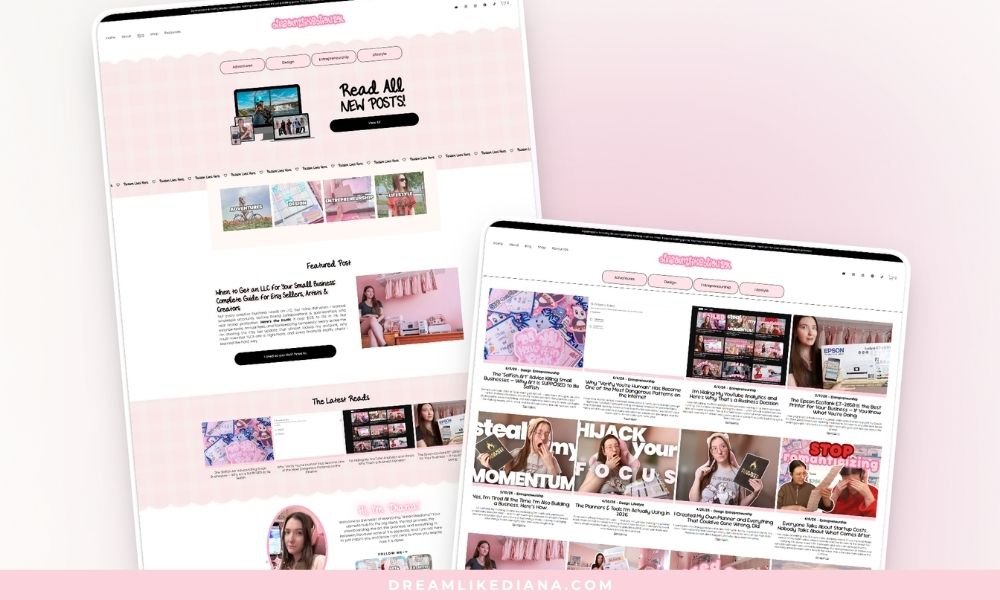
When you build on a platform, your brand exists inside their design system. Your publication starts looking like every other publication. Your personality becomes constrained by whatever customization options the platform decides to offer. When you own your website, the experience can actually feel like yours. The colors. The layout. The navigation. The personality. The little details. Those things may seem small, but they're part of what makes someone remember you. I built my brand around pink because that’s my favoriteeeeee color! But it is SO ME, it is how I met my partner, I even have a best selling design in it! I can’t even keep up with my own production!
The Ad Problem (And Why This Site Has None)
There's another benefit to owning your own website that people don't talk about enough: you get to decide how your site makes money.
And that matters because a lot of websites today feel like they were built for advertisers first and readers second. Pages take forever to load. Pop-ups appear before you've even finished the first paragraph. Ads interrupt the content every few scrolls. You're trying to read an article and suddenly you're playing whack-a-mole with banners, autoplay videos, cookie notices, newsletter prompts, and random things flying onto the screen asking for your attention. It's exhausting.
And look, I get it. Websites cost money. Hosting costs money. Domains cost money. Email marketing costs money. Most creators eventually have to figure out how they're going to pay for all of this. But one of the biggest advantages of owning your own platform is that you get to choose your trade-offs.
For me, that means no ads.
Not because I hate making money. Quite the opposite. This website costs me hundreds of dollars every year before I make a single dollar back. But I'd rather build something people genuinely enjoy visiting than squeeze every possible penny out of every pageview.
The funny thing is that this loops back to the previous point about design. When you own your website, you control the colors, the layout, the branding, the navigation, and the overall experience. Ads are part of that experience too. They affect how people interact with your content just as much as the design does.
Ownership isn't just about SEO. It's not just about monetization. It's not just about having your own domain name.
It's about control.
Control over your content. Control over your business. Control over your design. And control over how people experience your corner of the internet.
If you enjoy what I create and want to support the work, check out my shop, browse my partners page, grab a freebie, or toss a coin to the creator lol.
I'd rather earn support because people found value in what I made than because an ad network managed to squeeze one more impression out of a visitor.
So Should You Start a Blog or a Substack?
If you're a writer who wants to share your thoughts, build an audience over time, and eventually create real opportunities from your content, the answer is a blog. Every time.
A blog gives you a professional domain you own. SEO that works passively. No algorithm punishing you for not posting daily. No forced recommendations sending strangers to other people's inboxes. No paywall pressure. No social media noise pretending to be a writing community. Just your words, your platform, and the long game.
Substack is not evil. Some people are doing genuinely good things there. But it is a platform you don't own, built on an infrastructure designed to keep you dependent on it for discovery. And that dependency has a cost that most creators don't realize until they're burned out and have stopped writing altogether.
Blogging is not dead. It never was. The people who told you it was dead were either trying to sell you something or they just didn't have the patience for it. Good things take time. Blogs reward time.
You can do this. You just have to be willing to play a longer game than the internet has been conditioning you to play.
And if you're a talent manager reading this right now: I have the numbers. Email me.
Found this helpful? ♡
SHOP | EXCLUSIVE OFFERS | YOUTUBE | FREEBIES | TOSS A COIN

PIN ME NOW!